
Auto Accident Injury Treatment Specialist in Lee’s Summit, MO
An auto accident injury refers to any physical harm or trauma sustained as a result of a motor vehicle collision. Auto accidents can range from a minor fender-bender to a severe crash, and the injury can vary in severity as well. If you have been injured in an accident connect with Dr. Kyo Hwang at Prime Physical Therapy, Lee’s Summit, MO for proper diagnosis and treatment. Contact us to learn more, or schedule a consultation with our physical therapists today. We are conveniently located at 1161 NE Rice Rd Lee’s Summit, MO 64086.
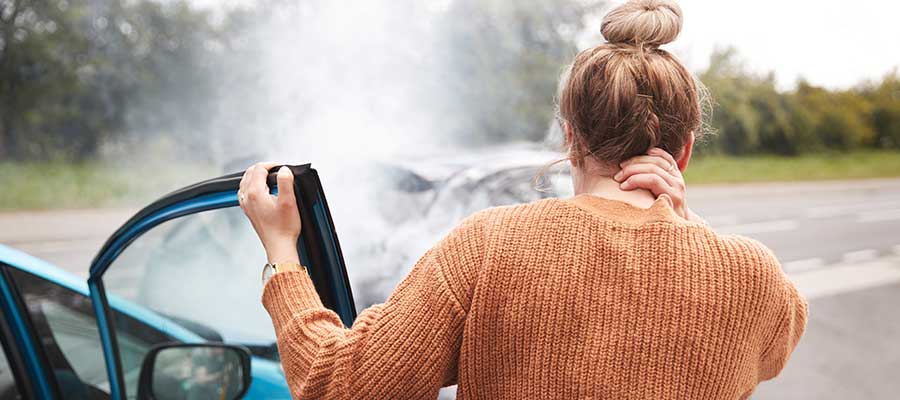
Table of Contents:
What type of therapy might be necessary after a car accident?
What are the different types of physical therapy techniques for a motor vehicle accident injury?
How long should I do physical therapy after an accident?
What are the benefits of physical therapy after a car accident?
Supporting Mobility and Recovery After a Car Accident at Prime Physical Therapy
An injury from a car accident ranges from minor to severe, depending on the severity of the accident. A car accident can cause pain, impaired mobility, difficulty with daily activity of living and/or absence from work. The different types of treatment may help improve pain and aforementioned problems after a car accident. Among different types of treatment is physical therapy that helps with pain and functional deficits. Physical therapy can help you return to doing what you used to love to do.
Physical therapy is a common treatment for injuries that focuses on restoring mobility, strength, and flexibility. Many physical therapy techniques can be used to treat injuries, including, but not limited to.
• SOFT TISSUE MOBILIZATION: Soft tissue mobilization helps improve soft tissue adhesions and trigger point, and promotes muscle, ligament, and tendon mobility.
• JOINT MOBILIZATION: Joint mobilization helps to regain join mobility and reduce pain. It allows the synovial fluid within the joint space to lubricate the joint and promote improved joint movement, allowing improved gross mobility.
• TRIGGER POINT RELEASE: A trigger point is a hyper-irritable spot, a palpable nodule in the taut band of skeletal muscle located within a larger muscle group. Trigger points are tender and painful to the touch and can elicit local tenderness, local twitch response and referred pain to distant parts of the body. Trigger point release is a procedure that applies firm pressure to the targeted muscles to reduce tension and alleviate pain in muscles that contain trigger points. In turn, trigger point release is intended to restore normal movement, relieve pain and reduce a risk of further tissue damage.
• GRASTON TECHNIQUE: The Graston Technique is a kind of manual therapy recognized as a soft-tissue instrument-assisted mobilization (IASTM). It is one of the many manual therapy techniques that uses instruments with a specialized form of massage that gently scrapes the skin. Soft tissue injuries can be debilitating and frustrating. The Graston Technique can effectively treat many soft tissue conditions. The Graston Technique allows for faster recovery of improving range of motion, eliminating pain, and restoring normal function.
• DRY NEEDLING: Dry Needling is an intramuscular stimulation and trigger point (tight muscle band) release by a solid filiform needle. Dry needling is another form of soft tissue mobilization that can help relax myofascial trigger points, reduce inflammation, decrease muscle tension, and ultimately relieve pain through trigger point release. Dry needling can be very successful in treating many musculoskeletal conditions, such as pain in the neck, shoulder, back, hip, knee and ankle/foot.
• KINESIOTAPING: Kinesio taping is one specific type of treatment tools that physical therapist often uses. It applies strips of special tape on your body in specific directions to help improve your mobility and support your joints, muscles, and tendons. Kinesio tape is used to facilitate motion and inhibit pain. Kinesio tape is a flexible material that moves when you move rather than it limits your motion. Kinesio taping may be used to treat back pain, neck pain, shoulder pain, hip pain, knee pain ankle/foot pain and other sport injuries.
•ULTRASOUND: Ultrasound is a form of mechanical energy used to treat pain and facilitate the healing process. Ultrasound therapy is the application of sound waves that cause micro vibrations to generate heat and treat a variety of soft tissue conditions. When soft tissues in the body are vibrating due to ultrasound, the friction produced at the molecular level causes heat that increases blood flow, promotes a healing process and improves tissue extensibility. Ultrasound may be effective, but not limited, for tendinopathy, joint stiffness, bursitis and muscle strains.
• ELECTRICAL STIMULATION: E-stim delivers mild electrical pulses through the skin to help stimulate compromised muscles or nerves to reduce pain. E-stim is a painless procedure that accelerates recovery and provides relief from painful or uncomfortable symptoms. E-stim by a physical therapy can also be used to decrease swelling, improve range of motion, reduce muscle spasm, provide neuromuscular re-education, and prevent or reverse muscle atrophy.
• THERAPEUTIC EXERCISE: Therapeutic exercises are specially designed movements and physical activities by a physical therapist intended to restore function, improve strength, flexibility and range of motion, and decrease pain. A physical therapist will investigate your subjective information, perform functional tests to assess your conditions and coordinate with you to develop a therapeutic exercise program planned to foster healing and improve function.
In some cases, medical interventions may be necessary to treat injuries. These interventions can include prescription medication, an injection and a surgery. Prescription medication, such for pain and/or inflammation, can be used along with physical therapy treatment.
The length of physical therapy after an accident varies depending on the type and severity of the condition, the areas affected, and how the individual responds to treatment. Some people may require a shorter rehabilitation period, while others may benefit from ongoing care to address pain, stiffness, weakness, or limited mobility.
At Prime Physical Therapy, our physical therapists assess each patient’s movement, strength, range of motion, and functional needs to determine an appropriate frequency and duration of care. The treatment plan may be adjusted over time based on progress and individual recovery goals.
Physical therapy after a car accident can help address pain, stiffness, muscle weakness, limited range of motion, and difficulty performing everyday activities. A physical therapist can evaluate how the accident has affected movement and develop an individualized rehabilitation program based on the areas involved and the patient’s functional needs.
Treatment may include therapeutic exercises, stretching, strengthening, mobility work, and hands-on techniques when appropriate. Physical therapy can help restore movement, improve strength and flexibility, support better balance and coordination, and help patients gradually return to work, exercise, and routine activities.
At Prime Physical Therapy in Lee’s Summit, MO, our team provides individualized rehabilitation for patients experiencing movement limitations, discomfort, weakness, or stiffness following a car accident. Care begins with an evaluation of mobility, strength, range of motion, and functional challenges to determine an appropriate rehabilitation approach.
Our team develops a personalized treatment plan that may include targeted exercises, mobility techniques, strengthening, stretching, and functional movement training. Treatment can be adjusted as progress is made, helping patients work toward improved mobility, function, and confidence in their daily activities. For more information, contact us today. We are conveniently located at 1161 NE Rice Rd Lee’s Summit, MO 64086. We serve patients from Lee’s Summit, Blue Springs, Independence, Raytown, Lake Lotawana, Greenwood, Grain Valley, Kansas City, MO, and other surrounding areas!
Check Out Our 5 Star Reviews



Additional Services You May Need
▸ Physical Therapy
▸ Manual Therapy
▸ Neurological Disorders
▸ Concussion Therapy
▸ Vestibular Rehabilitation
▸ Sports Medicine
▸ Kinesiotaping
▸ Dry Needling
▸ Graston Technique
▸ Trigger Point Release
▸ Neural Mobilization
▸ Muscle Energy Technique
▸ Joint Mobilization
▸ Knee Pain
▸ Soft Tissue Mobilization
▸ Electrical Stimulation
▸ Headache/Head pain
▸ Shoulder Pain
▸ Low Back Pain
▸ Ankle/Foot Pain
▸ Dizziness
▸ Arthritis Rehabilitation
▸ Multiple Sclerosis
▸ Parkinson’s Disease


 Send Text
 How May I Help You?